Sciatica Relief: Exercises and Professional Treatment That Work
import Image from 'next/image'
Understanding Sciatica
Sciatica is characterized by pain, numbness, or tingling that radiates from your lower back down through your leg. It occurs when the sciatic nerve, the longest nerve in your body, becomes compressed or irritated. If you're experiencing sharp pain running down your leg, you're not alone. Thousands of people in the Overland Park area suffer from sciatica, and the good news is that targeted relief is possible.
Common Causes of Sciatica
Herniated discs are among the most frequent culprits, but sciatica can also develop from piriformis syndrome when a tight muscle in your buttocks compresses the nerve. Spinal stenosis, which is narrowing of the spinal canal, can also irritate the sciatic nerve. Other causes include spondylolisthesis when vertebrae shift out of alignment, and pregnancy-related changes that increase pressure on the nerve.
Why Exercises Help
While rest might seem like the right answer, movement is often more effective for sciatica relief than prolonged immobilization. Targeted exercises work by reducing nerve compression through gentle stretching, improving circulation to the affected area, and strengthening the muscles that support your spine. Better flexibility and mobility mean less irritation on the nerve, and consistent movement promotes faster healing.
Effective Sciatica Relief Exercises
The piriformis muscle, located deep in your buttocks, often compresses the sciatic nerve. To perform the piriformis stretch, lie on your back with both knees bent and cross your right ankle over your left knee. Gently pull your left knee toward your chest and hold for thirty seconds, then repeat three times on each side. Do this two to three times daily for best results.
The spinal twist helps decompress the spine and release nerve tension. Lie on your back with your knees bent and slowly drop both knees to the right while keeping your shoulders flat on the floor. Hold this position for thirty seconds, then repeat on the other side. Perform this stretch two to three times daily to maintain flexibility and reduce compression.
This dynamic movement mobilizes your entire spine and reduces compression. Start on your hands and knees, then arch your back and drop your belly toward the floor. Slowly transition by rounding your spine and pulling your belly in. Move smoothly between positions for one minute, repeating two to three times daily.
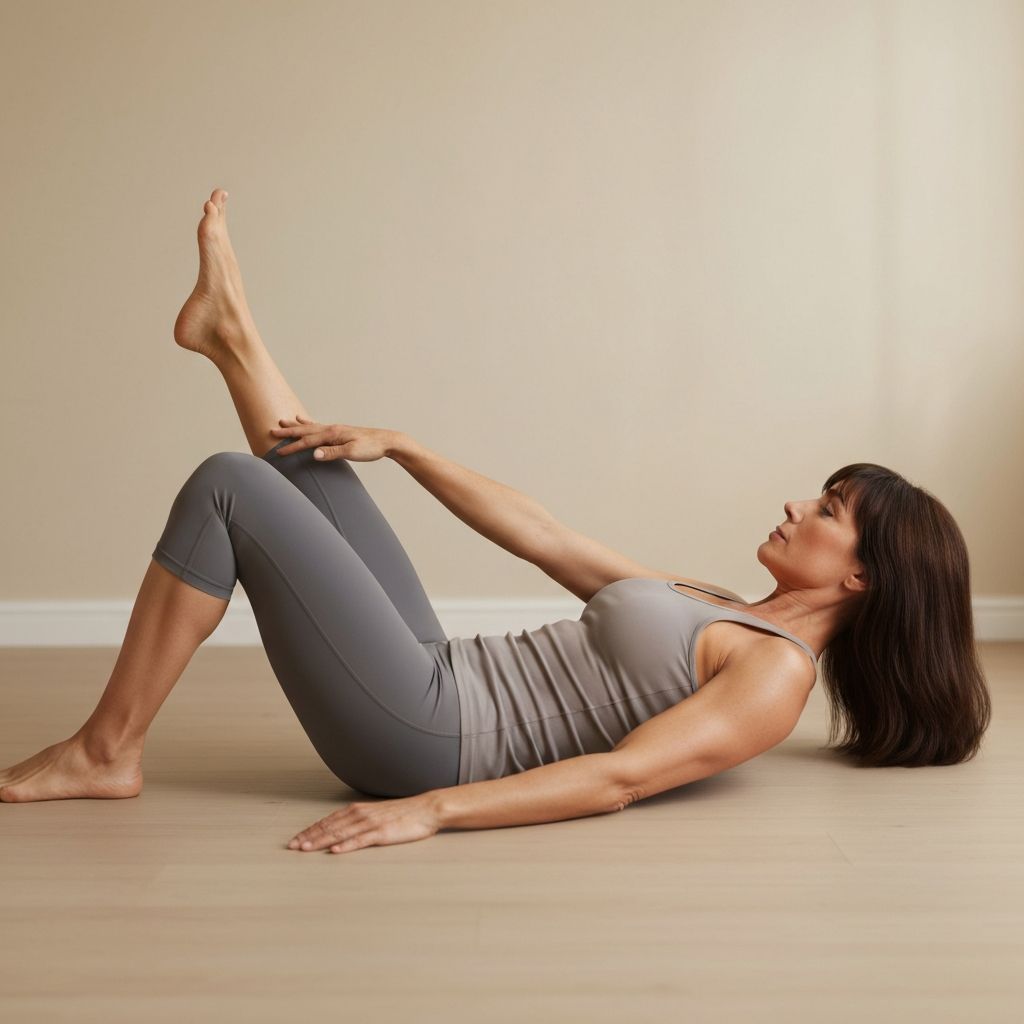
This stretch targets the glutes and helps reduce sciatic compression. Lie on your back with both legs extended, bend your right knee and gently pull it toward your left shoulder. Hold this stretch for thirty seconds, then repeat on the other side. The key is moving slowly and avoiding any jerky motions that could irritate the nerve further.
Tight hamstrings can contribute to sciatic nerve tension throughout the entire leg. Lie on your back near a door frame and extend your left leg up against the wall or door, keeping your right leg on the ground. Hold the stretch for thirty seconds and feel the gentle tension down the back of your leg, then switch sides. This simple stretch can make a significant difference when done consistently.
Treatment Approach at Move Muscle & Joint
Exercises provide immediate relief, but professional care addresses the underlying cause of your sciatica. Dr. Hugunin creates personalized treatment plans combining at-home exercises with professional treatment.
Your first visit includes a comprehensive evaluation of your sciatica history, symptoms, lifestyle factors, and specific tests to identify the cause of nerve compression. Based on this evaluation, a personalized plan is developed using any combination of chiropractic adjustments, myofascial release therapy, physical therapy exercises, ergonomic coaching, and in some cases, shockwave therapy for chronic cases.
Regular adjustments maintain spinal alignment and prevent sciatica recurrence. As your condition improves, treatment frequency decreases, but ongoing maintenance visits help keep you pain-free and active.
Prevention and Long-Term Management
The best treatment is prevention. Simple lifestyle changes can significantly reduce sciatica frequency and prevent future episodes.
Proper posture reduces strain on your sciatic nerve. Simple adjustments to your workspace, daily habits, and sitting position can dramatically reduce nerve compression. Dr. Hugunin provides specific guidance on ergonomics and movement patterns.
Movement reduces muscle tension and improves circulation. Activities like walking, swimming, or gentle yoga can significantly reduce sciatica frequency and severity.
Proper nutrition and staying well-hydrated support overall healing. Certain foods can reduce inflammation, while others may increase it. Dr. Hugunin can provide dietary guidance as part of your treatment plan.
Success Stories from Our Overland Park Patients
Sarah, an office manager, had been struggling with sciatica for three months. She couldn't sit through her workday without sharp pain radiating down her leg. After combining stretching exercises with chiropractic adjustments and myofascial release therapy, she noticed improvement within two weeks. Within six weeks, her sciatica had resolved, and she returned to working full days pain-free. "The exercises gave me immediate relief, but the professional care from Dr. Hugunin made all the difference," Sarah shared.
Mark, a local construction worker, experienced sciatica after a work injury. He was skeptical that simple exercises could help, but consistency was key. Combined with myofascial release therapy and physical therapy, he returned to full work capacity within one month. "I wish I'd come in earlier," Mark said. "The combination of home exercises and professional treatment worked better than anything I tried before."
Jennifer, a 52-year-old office manager, dealt with chronic sciatica from years of sitting. She discovered that consistent stretching combined with our physical therapy program was transformative. "I can now sit through full workdays without pain," she reported after just six weeks of treatment.
Important Precautions and Safety
Stop immediately if pain increases. Sharp or worsening pain is a sign to pause and assess what's happening. Move slowly through all stretches and avoid jerky or sudden movements that could irritate an already sensitive nerve. Start gently and don't push into deep stretches right away, especially if you're new to these exercises. Remember that regular, gentle movement is better than sporadic intense exercise.
Certain conditions require medical attention rather than home treatment. If you experience numbness in your groin or loss of bladder control, seek medical attention immediately. Some people also find that ice reduces inflammation in the first 48 hours, while heat feels better after that initial period.
When to Seek Professional Help
Professional evaluation is recommended for sciatica pain lasting more than two weeks, pain that significantly impacts your daily life, or if home exercises aren't providing relief after one week. Dr. Hugunin can identify the underlying cause and perform spinal adjustments to reduce nerve compression. We create personalized exercise programs tailored to your specific condition and provide advanced treatments like shockwave therapy if needed. Our team also teaches you how to prevent future episodes through proper posture and movement habits.
Ready for Expert Sciatica Treatment
Don't let sciatica control your life any longer. Schedule your consultation with Dr. Joseph Hugunin at Move Muscle & Joint in Overland Park today. We'll create a personalized plan combining exercise guidance and professional treatment to get you back to the activities you love.
Special Offer: New patients receive a comprehensive evaluation and first treatment for just twenty-nine dollars. This special offer helps you experience the benefits of chiropractic care risk-free. [Book your appointment now](/contact-booking) and take the first step toward lasting relief. \`\`\`
Written by
Dr. Joseph Hugunin, DC
Founder of Move Muscle & Joint | Movement-Focused Chiropractor
Interested in More Health Tips?
Explore more expert articles about pain relief, movement, and wellness.